The Microbrewed Beer of the Month Club

Past Newsletters

Vol. 5 No. 8

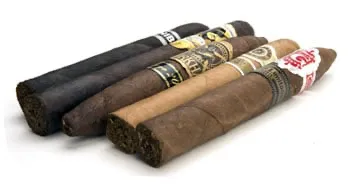
Featured Cigar Dimensions

Brand Name: Shape Size
A. Ashe Churchill Churchill 7 ½ x 50
B. Ashe Perfecto Perfecto 4 x 42/52
C. Ashe Torpedo Torpedo 6 x 40/52
D. Lone Wolf Rojo Robusto 5 x 50
E. Lone Wolf Vintage Series Double Corona 7 ½ x 50

Featured Cigars

The Ashe Cigars

The Ashe Cigar line, produced by the Vista Real Cigar Co., is produced in the town of Tamboril, Dominican Republic. Their fillers and binders are blends of tobaccos grown in the Dominican’s Cibao Valley and San Victor Moca. In fact, Ashe Cigars are made from the same tobaccos supplied to Tabacos Dominicanos, S.A., makers of Davidoff, Avo and other more widely recognizable premium brands. All Ashe cigars are a blend of Cubano Piloto in both Lijero and Seco as well as Olor Dominicano used as the trippa or filler. The capote or binders on are also Dominican and the line’s wrapper is primarily offered in the finest grade 3 yr. old Connecticut Shade. Each cigar spends forty-five days on the shelf in the factory in Tamboril before being packed and shipped.

The word Ashe (pronounced "aah-chey") originated in the African Yoruba language and was assimilated into Cuban culture centuries ago. Ashe means personal power, the luck and energy that one carries from birth and cultivated with maturity and the gaining of knowledge and wisdom. In Cuba, if you have Ashe, you have what it takes; the gods are with you, charging you with strength and spirit and luck. Our panel really felt that the Ashe line has what it takes. Each cigar sampled was perfectly constructed and packed with flavor. The Petite Perfecto featured is an extremely difficult and expensive cigar to roll as is it’s larger Torpedo brother. A pair of seasoned rollers can only produce roughly 200 of either shape per day relative to the 5-600 that they could roll in most other shapes. The line is produced in only four shapes and we liked them all so much, it was difficult to choose only three to share with you. The fourth shape produced, not featured, is a robusto.

Churchill

Binder:Dominican Olor
Filler: Domincan Seco & Lijero
Wrapper: USA Connecticut Shade-Claro
Strength (Mild 1, Full 10): 5
Panel Rating: 90

Notes from the Panel:

We really like this cigar line. All four shapes evaluated were expertly crafted. Aesthetically, look for a very appealing cigar, substantial in your hand, no soft spots and an inviting oily sheen highlighting a beautiful wrapper. Note an even burn and easy draw. We found the aroma very pleasing, offering traces of spiciness. The flavor is full and the single most prominent characteristic is a classic Dominican spiciness. Overall, a creamy, rich, flavorful mild smoke. Perfect with a light dessert. Try pairing it with your favorite port or hoppy pale ale.

Perfecto

Binder: Dominican Olor
Filler: Domincan Seco & Lijero
Wrapper: USA Connecticut Shade-Claro
Strength (Mild 1, Full 10): 7
Panel Rating: 93

Notes from the Panel:

Our favorite of the brand, this dandy little smoke was extremely well made, offered an excellent draw, near perfect burn, and was generally a lot of fun to smoke. Look for a very fragrant, fruity and woody aroma and lots of smoke. It’s medium body was slightly nutty, very creamy and moved more towards fuller, spicy tones as we got further into the cigar. Overall, a very rich, creamy, satisfying cigar aged quite nicely. Again, we’d have to recommend this one with either a port or full-bodied ale.

Torpedo

Binder: Dominican Olor
Filler: Domincan Seco & Lijero
Wrapper: USA Connecticut Shade-Claro
Strength (Mild 1, Full 10): 6
Panel Rating: 92

Notes from the Panel:

Well constructed. Excellent draw. Look for a well balanced, spicy aroma. The flavor lets you know that you’re smoking a great Dominican cigar, one with a full body and plenty of taste. We found it to be very creamy with a definite spiciness, full, but not overpowering. Overall, another solid cigar from the Ashe brand. Very satisfying, flavorful and mellow. You’re going to love it. Consider pairing this sweet treat with a full-bodied Merlot.

The Lone Wolf Cigars

Lone Wolf International was formed in July, 1996 when James Belushi and Chuck Norris teamed with a group of investors who had recently opened a chain of retail cigar lounges in California. The original intent of the partnership was not only to create a private label premium cigar, but a chain of chic "Club Babaloo"-type cigar lounges nationwide. With the focus first on developing the cigar brand, the initial step was to enlist some of the most respected manufacturers in the industry to produce their product. Not exactly an easy task with today's demand for premium smokes.

Each of the three Lone Wolf brands are manufactured in the Dominican Republic, with each made by a different manufacturer. M.A.T.A.S.A. (makers of Fonseca and Romeo & Julieta), produce the Signature Select brand. The Lobo Rojo brand is made in the La Aurora factory and the Vintage Series is manufactured by the Palmarejo factory. Each line has been highly rated in Cigar Aficionado, The Cigar Insider and in Smoke magazine as well as in other third party reviews. Lone Wolf chose a different wrapper leaf for each brand, while the fillers and binders are all Dominican Piloto Cubano and Dominican Olor tobaccos. Each factory ages them differently however, and they grow the tobacco in different fields, producing three definitely separate and distinct cigar brands.

Our panel very much enjoyed the Rojo Lobo and Vintage Series samples reviewed and this month we’re featuring a cigar from each line. Both lines rated from the mid 80’s to low 90’s in Cigar Insider. We know you’re really going to enjoy these two exceptional cigars, ‘cause if you don’t Chuck’s gonna swing by your place and show you some new martial art moves. Enjoy!

For more information on the Lone Wolf Cigar Company, call them at 800-586-9653.

Vintage Series Double Corona

Binder: Dominican Olor
Filler: Dominican Piloto Cubano
Wrapper: Indonesian-CO Claro
Strength (Mild 1, Full 10): 6
Panel Rating: 89

Notes from the Panel:

This is a very well made cigar. Immediately note a nice easy draw and a slow, even burn. We picked up hints of coffee bean and perhaps hazelnuts in this creamy, mild to medium-bodied smoke. A definite earthy spiciness also emerges half way through which is very pleasant and not the least bit overpowering. Look for a cedary finish. Overall, we liked this cigar very much. It offers a complex, wonderful balance of flavors with a full, yet very smooth finish. Consider pairing it with a full-bodied scotch or cognac.

Rojo Robusto

Binder: Dominican Olor
Filler: Dominican Piloto Cubano
Wrapper: Sumatran/Cameroon Shade-CO
Strength (Mild 1, Full 10): 7.5
Panel Rating: 92

Notes from the Panel:

Our favorite of the Lone Wolf line is extremely well constructed. Note a smooth, satin-like wrapper, a firm, even roll, and a near perfect draw. Look for a pleasant aroma with hints of nuts and cedar. We found the flavor to be rich and full, offering a superb blend of tobacco, spice and floral characteristics. Overall, a subtly complex and seductive smoke. Exceptionally crafted and very enjoyable from start to finish. You might try smoking this one with Armagnac.

Tobacco and Soil

Researching material for this article as far back as 1901 turned up frequent references to tobacco as a "weed." How they selected this term should baffle any suburbanite who has kneeled in defeat before real weeds like crabgrass or chickweed. To me, a weed is any undesirable, worthless plant with powers of resistance and rejuvenation that render pitiable any attempts to terminate it. That ain't tobacco. It's well-being, and your smoking pleasure, are affected by any number of influences upon the plant. Depending upon tobacco's stage of growth, any number of pests, viruses, molds or bacteria can victimize it. Hostile agents aside, this article will address how the growing medium itself, the soil, can affect the viability of the crop and the market value of the leaf.

The soil's consistency, ignoring the nutrients it contains, determines the quality of the plant and whether it will even grow. Tobacco likes a loose, porous soil like sandy loam. It dislikes having wet roots so heavy clays that hold water discourage its growth. The sand particles should be predominately fine or very fine; coarse sand doesn’t hold water long enough to suit the plants, and harvests will be sparse. Limey soils will produce leaves in abundance, but they'll be tasteless. Both the soil of the germinating beds where the seeds spend their first six weeks of life, and the permanent fields where they mature, require preparatory treatment. Burning leaves, brush and some light wood over these plots kills fungi spores and weed seeds; it also adds potash and potassium acid to the soil. This is touchy business as too hot a fire will damage the soil structure, which retards the seedlings' growth. American tobacco growers sometimes sterilize soil by laying large metal pans on the it and pumping steam through attached tubes, or by sprinkling a formaldehyde solution into the soil.

Now, the soil is ready for the seeds. They are so fine (250,000 per ounce) that planters usually mix them in with wood ash so they can see the trail of seed/ash as they lay it in the furrows. The seed is covered with a critically thin layer of dirt, only about 1/8" or so; otherwise, they can't make it through the cover.

Tobacco can be grown for several years on the same soil without depleting it. Overworked, nutrient-starved soil can be rejuvenated, however as commercial fertilizer is beyond the economic grasp of most Caribbean growers, they rely primarily on composted vegetable matter. Additionally, tobacco stems and midribs that have been stripped from the leaves at the factories, are often used as fertilizer. They release large quantities of the nutrients described below, with the added advantage that the tobacco juice in them discourages insects, especially cutworms, which are tobacco's nemesis.

Like us, tobacco is what it eats. An average acre yields about 1,800 pounds of cured wrapper leaf. During its growth, it consumes about 67 pounds of nitrogen, which must be available in large quantities during the growth period prior to the ripening phase. Farmers avoid fish, blood, or slaughterhouse fertilizer because they yield their nutrients too slowly. The nitrogen from fish or animals is still working as the crop is reaching maturity, which causes the leaves to be undesirably dark and coarse. One exception is dried fish, which gives up its nitrogen quickly, and which produces a finer finished leaf at season's end. Cottonseed meal gives leaves more body and substance, desirable traits in wrapper leaf, but only if the weather is not unseasonably cool or wet. If these conditions prevail, the nitrogen once again powers plant growth too late, when it should be ripening, not growing. This results in plenty of low quality leaves.

Tobacco loves potash, which greatly influences leaf-burning properties favorably. But too much alkaline potash causes root rot. Changing to acid potash for awhile cures the problem. Tobacco will also consume 16 pounds of phosphoric acid and 91 pounds of lime from that same acre of dirt. Lime is necessary to provide the proper alkaline balance of the soil for growth of friendly bacteria. Too much, though, and the ash on your cigar will be soft and flake off.

As you can see, there are quite a few factors involved in bringing a high quality leaf to market. Tobacco production is one field of agriculture that doesn't lend itself to chemical or laboratory analysis. The best soils and additives for lush, tasty leaf are determined by art, not science. The opinion of one experienced farmer, sifting the dirt through his fingers, are infinitely more profound than an entire room full of USDA agronomists. Hence the beauty and mystique of tobacco.

Storing Your Smokes

Equally important to evaluating and appreciating the cigars featured each month is the proper storage and sometimes continued aging of them prior to smoking them. Ideally, you should store your cigars in a humidor to maintain them at their peak smokability. Be sure and use only distilled water in your humidor or you will ultimately see mold. As for the cigars, if they've got cellophane on them, as a general rule, leave it on. Cellophane is actually quite porous and the moisture from a humidor will penetrate the wrapper. If in fact, you don’t yet own a humidor or prefer not to spend the money for the amount of tobacco you indulge, there are many varied options. In the short term you can put them in a zip lock plastic bag (open) and then place the bag in a Tupperware-like container. Put a dampened ball of paper towel in the container as well, but do not allow the paper towel to touch the cigars. Do not put your cigars in the refrigerator; it's too cold and dry. Be certain to examine your cigars frequently, checking for mold. If you see mold beginning to grow, allow your "Tupper-dor" to dry out somewhat and reduce the amount of moisture its receiving.

Tobacco Bits

Abe’s Civil War Tobacco Tax - As the Civil War was slowly and painfully coming to an end in 1864, the Union felt the belt-tightening effects of a country divided and too long at war with itself. In an attempt to raise revenue, President Lincoln passed the Revenue Act of 1864, which required that all cigars be packed in wooden boxes of 25, 50, 100, or 250 and be federally taxed complete with stamp) to be sold legally. Although boxes existed before this point, it wasn't until Lincoln's decree that they became standard packaging.

Thanks to the Arawaks - It is widely held that the predecessors of the Tanio Indians, the Arawaks, brought the seeds of the tobacco plant to Cuba when they migrated from the South American continent into the Caribbean, landing in Cuba. It can be said that a Bolivar Belicoso Fino was the ultimate gift of the Arawaks.

Covered Wagons and Cigars - The word stogie is actually a shortened form of Conestoga. During the mid- to late-nineteenth century, the small Pennsylvania town of Conestoga lent its name not only to the covered wagons it produced for long treks westward, but for the foot-long, panatela-sized stogies it manufactured. Long after Conestoga's tobacco industry dried up, the name "stogie" still burns on.

Early Cigar Industry Growth - If it seems that everybody and his mother these days has a cigar label made for them, imagine what it was like during the late nineteenth century. By 1880 every state in the Union except Idaho and Montana was home to at least one cigar factory pumping out stogies.

You were what you Smoked - At the turn of the century, it was common practice to choose a cigar based on its similarity to one's body type. Shorter, stout men smoked robustos or figurados, while tall, lanky types smoked lonsdales and panatelas. Today, smokers are open to cigars that don't correspond to their particular physiognomy. Larger-ring-gauged cigars smoke cooler and also offer a much wider flavor profile. Longer cigars will develop as they smoke, becoming more robust and full-bodied.

Seasoning your Humidor - First, remove the humidifying element and hygrometer. Next, take a fresh sponge, wet it with distilled water, and wipe down all exposed cedar surfaces in the interior. Once the interior has been properly wetted, fill the humidifying element with the distilled water and replace the unit and the hygrometer. Finally, place the damp sponge used to wipe down the interior on a dry towel inside the humidor and leave it closed for 24 hours. Remove the sponge after that period, pat the area under the towel dry, and fill the humidor with cigars. You're now good to go!

Calibrating your Hygrometer - If your humidor has a hygrometer to measure relative humidity, you should calibrate it to ensure a somewhat accurate reading. The easiest method to calibrate a hygrometer is to remove the unit from your humidor and wrap it in a towel moistened, but not soaked, with tepid water. Leave the wrapped unit out over- night. By morning the gauge should read between 96% and 98% humidity. If it does not, simply adjust the dial so that it does and you're well on your way to semi-accurate humidity readings. (Few hygrometers are 100% accurate.)

Bloom or Mold? - If you notice a white, flaky powder on the wrapper of the cigars in your humidor, don't be alarmed. This growth, called bloom (or plume), is the result of the oils in the cigar maturing and evaporating. Bloom is actually a sign of proper tobacco maturation and it’s presence is a good thang as it enhances flavors present in the cigars. Blue growth on your smokes, however, is mold and means that your humidor is overly humidified. At this stage, your smokes are ruined and should be trashed.

To review, White = Bloom = Good. Blue = Mold = Not Good.

Ask Murl

Dear Murl,

Is there an appropriate time to stop smoking your cigar? Do you smoke yours down to the nub or leave an inch or so? What’s the etiquette, you mighty fine canine?

Tim Hayes
Irvine, CA

Yo Timmy!

Your name sounds familiar. Are you a baseball player? Rock Star? Or just an average working Joe trying to live up to your mamma’s demanding expectations. No matter. I liked your name, so your question gets answered this month. What can I say, we don’t have a Bingo Master to assist with the selection process, so I have to devise my own methods.

Personally, I like to smoke my favorites until my whiskers begin to singe. One evening, I even tried to find my old College roach clip to savor an exceptional Monte Cristo. I like to enjoy the entire experience of a cigar and note the changes as it picks up speed and builds in flavor at the end of the smoke. But hey, that’s me, a somewhat compulsive pooch that also chews furniture to the bone as well. According to Zino Davidoff, " A smoker of delicacy does not prolong it." There are those who say once the cigar has burned down more than halfway, it is done. Others will smoke a cigar down to the width of your finger. Some cigars definitely lend themselves to being smoked to the nub and others really ought to be extinguished before they’re lit. Like many subjects that revolve around the pastime of smoking, it’s quite subjective and you should keep it burnin’ until you ain’t enjoying any more. When you do finally put it down, don’t tamp or snuff it out. Simply set it down and let it burn itself out. Hope that sheds some light on it, Timski.

Woof!
Murl.

For Members Only

Give Your Friends FREE Beer, Wine, Cheese, Chocolate, Cigars & Flowers!
Through our Customer Appreciation Program

Your name has real value to your friends, co-workers, and family members! Every time a friend, family member, or anyone else you know joins any one of our clubs, [or gives a gift] for 3 months or longer, we'll give them 50% off of their first month, but only when they mention your name. And we'll also give you 50% off your next month too which can either be applied towards your current membership or you can try one of our other Clubs out! (We can add one more month to your order at 50% off for prepaid memberships!)

The Fine Print: Members giving gift memberships do not qualify for referral credits and you can't give yourself a gift to qualify! This Program is mutually exclusive of any other promotions.

Discounted Box Re-orders!
5 Paks Now Available!

Cigar of the Month Society members can take advantage of our volume purchasing and re-order their favorite cigars in box quantities at just over our wholesale costs. Re-order any selection featured in box quantities of 25 cigars or order them in convenient 5 paks! Other cigar shapes and sizes not actually featured, but from a featured brand line may also be re-ordered. Call for pricing.

Featured Cigar Box Cost Individual
    Cost
A. Ashe Churchill $87.50 $4.50 a cigar
B. Ashe Perfecto $87.50 $4.50 a cigar
C. Ashe Torpedo $95.50 $4.80 a cigar
D. Lone Wolf Rojo Robusto $95.50 $4.80 a cigar
E. Lone Wolf Vintage Select Double Corona $87.50 $4.50 a cigar

Please allow 1-2 weeks for delivery and add $6.95 for S&H for your first box and $2.00 for each additional box. S&H for 5-paks is $4.95 and $1.00 for each additional 5-pak. S&H for International re-orders must be calculated on an individual basis. Prices are subject to change.

Membership Q & A

Note: Please do not use our email address to make any account related information changes such as address or billing changes, membership extensions, or terminations. To ensure timely processing of your request, please call us at 800-625-8238.

Q: What should I do if I'm moving or want to extend my membership?
A: Please call us prior to the 10 th of the month to make all account related information changes such as address changes, membership extensions & terminations, or gift accounts desiring to continue their memberships. Address changes made after that time may require a $4.00 re-shipping charge.

Q: How will the charge appear on my credit card statement:
A: Your credit card statement will reflect our Incorporated business name, C&H Clubs, U.S.A., Inc., NOT The Cigar Society.

Q: What happens if my shipment is damaged?
A: If you shipment arrives damaged, please call us immediately toll free at 1-800-625-8238 and report the incident for a prompt resolution.

Q: What happens if my credit card is declined?
A: We will attempt to reprocess the card and if it does not clear on the 2nd attempt, you’ll receive a courtesy notice asking for an alternative payment method and your order will be temporarily suspended until we hear from you. As we incur a $ 2.00 re-processing fee each time your card does not clear, that charge is passed on to you.

Q: What happens if I join under a special incentive program and don’t stay a member for the entire term committed?
A: Not a problem. Although we want to do everything we can to keep you as a member, we will allow you to cancel your subscription early, however, you will be responsible to pay for the item which was given to you as part of the promotion.

C&H Internationals Logo Since 1994
Since 1994
Join our Club
Gift Memberships
Renewals
Reorders
Home
Cigar of the Month Club Info
Current Cigar Selections
Past Selections
Q&A
Testimonials
Other Gourmet Clubs
Corporate Gifts
Wedding Gifts
Industry Resouces
Events
Print a Gift Card
Send a Virtual Stogie
Refer a Friend
Send a Hint
E-Promos
Contact Us
Link to Us

1 - 800 - 625 - 8238
(Outside US call: 949-206-1904)
P.O. Box 1627, Lake Forest, CA 92609